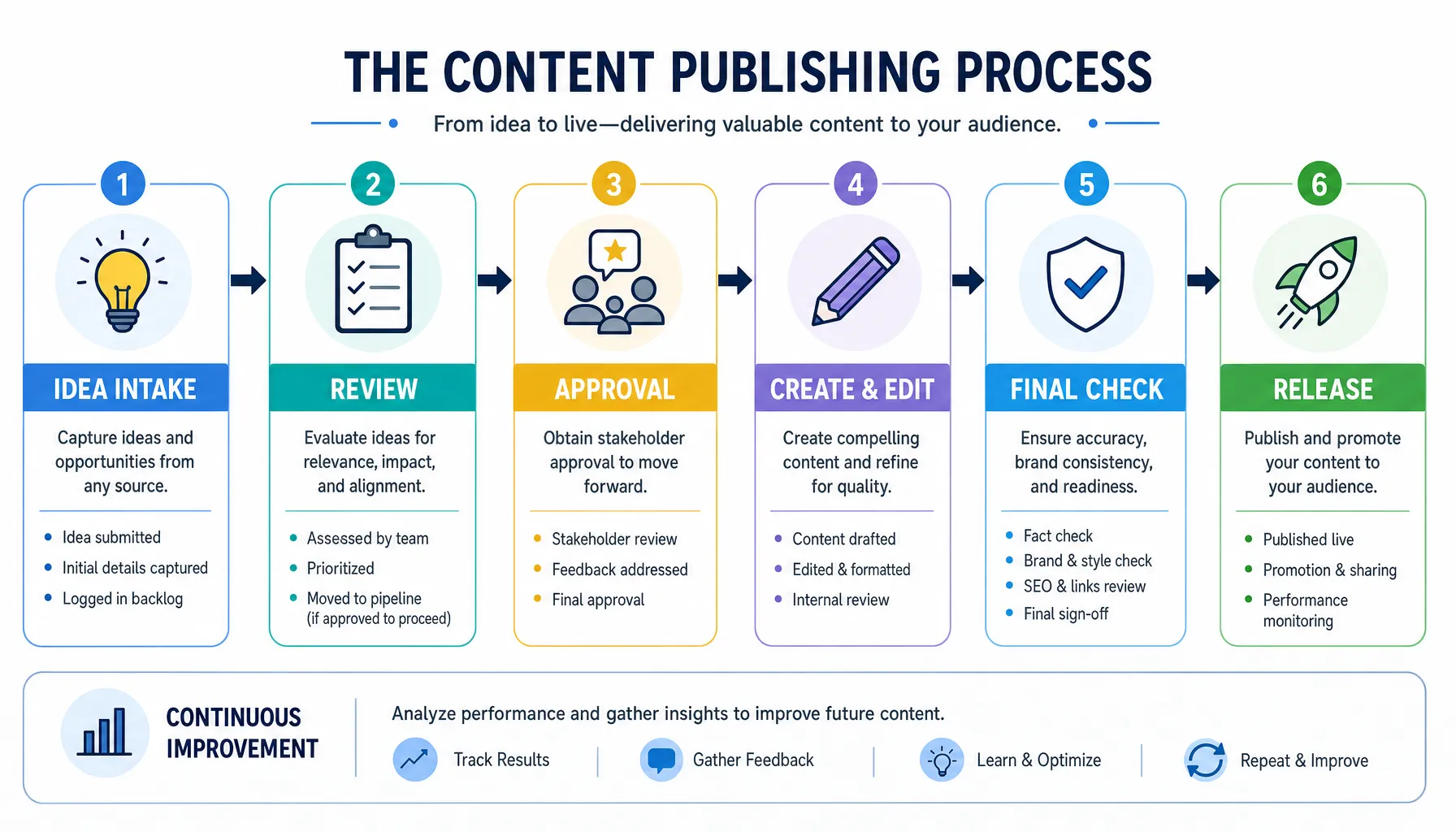
A clear plan is the beginning, not the publishing system
A project plan can identify the audience, message, evidence, owner, and next action. It does not automatically create an editorial rhythm. Publishing still requires research, drafting, claim review, revision, release, and a way to learn from the result.
For a small team, the gap often appears after the first piece. The strategy is sensible, but day-to-day work interrupts the cadence. Drafts live in different places. Feedback arrives without a decision. “Ready” and “published” become two very different states.
If the plan is not clear yet, start with the free ChorOS Hero’s Journey planner or read Messy Project → Clear Plan.
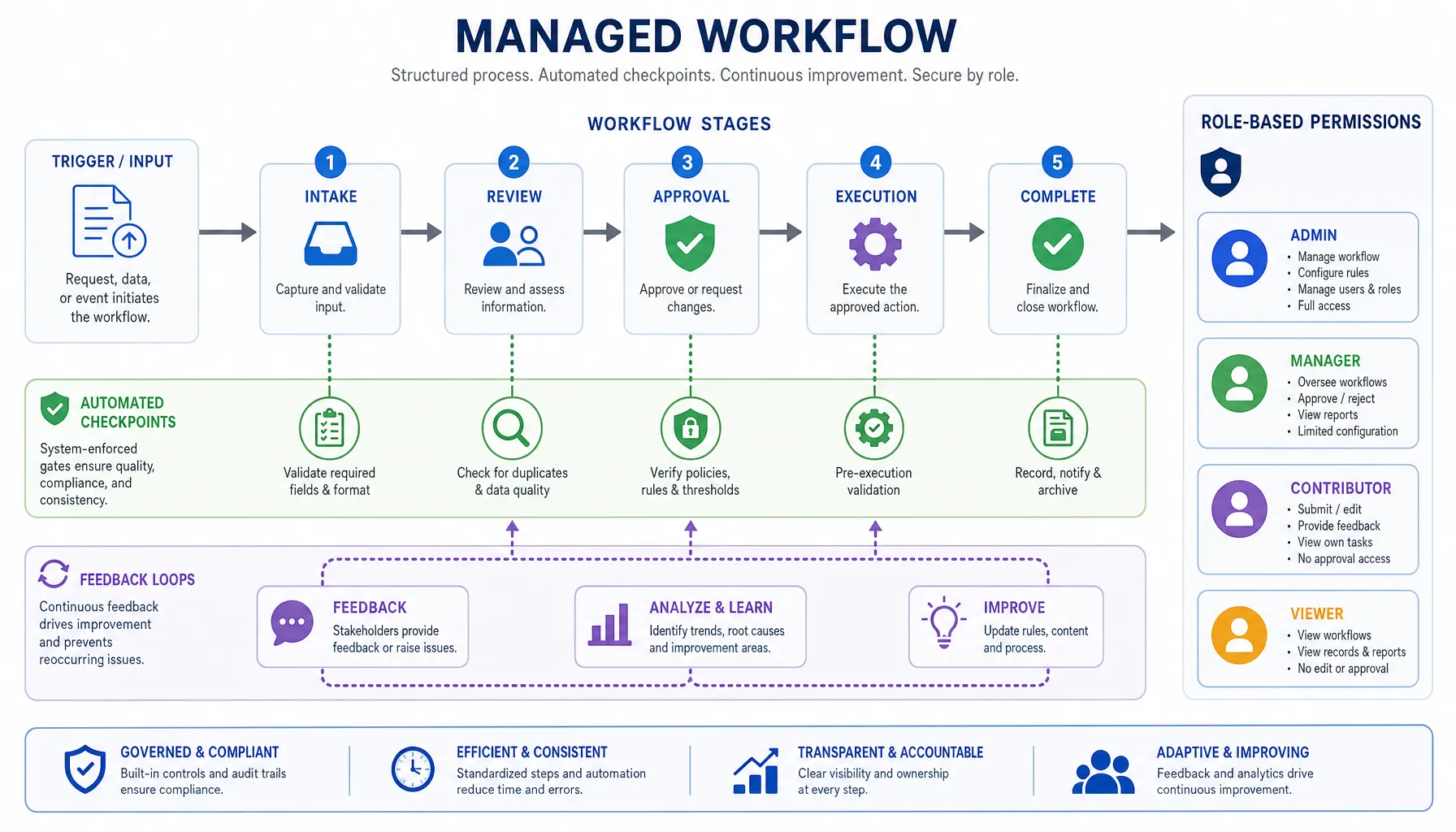
Decide what must remain human
Before adding a publishing workflow, define the decisions a person must own. At minimum:
- the customer problem and intended outcome;
- which factual claims are acceptable;
- the final editorial voice;
- whether and where the article goes live;
- what the response actually proves.
Automation can organize work and prepare evidence. It should not quietly convert a draft into a public claim.
Build a repeatable release path
A dependable content loop has visible gates:
- Intake: one topic, one audience, and one measurable next step.
- Research: sources and assumptions are collected before the draft hardens.
- Draft and synthesis: the article is written, compared, and revised.
- Human fact review: blocking claims are accepted with evidence or removed.
- Publication: the release is complete only when the canonical public page is live.
- Measurement: visits, opted-in actions, and delivery receipts are reviewed before the message is repeated.
The preceding article explains how three-model synthesis exposes disagreements before they become public claims.
Where GREG fits
GREG is an optional managed publishing service for teams that have a useful plan but do not want to operate the full editorial pipeline themselves. It is designed around a governed sequence from topic through human fact approval to a receipt-backed public article.
GREG is separate from ChorOS. It is not bundled access, an automatic entitlement, or a promise of instant publication. The next step is a conversation about the audience, workflow, review responsibilities, and publishing destination.
If that operational help would be useful, ask Muse Nexus about GREG managed publishing. The inquiry indicates interest; it does not create a purchase or grant product access.
Measure before increasing volume
Consistency should not mean producing more of what nobody uses. Start with a small series, give each article one clear next step, and watch the full journey: source, visit, signup, provider acceptance, and delivery. Repeat the message and channel only after the receipts show that the loop works.
Keep paid scaling separate. Traffic, signups, delivered follow-ups, purchases, and entitlement are different gates. A publishing system becomes valuable when it helps the team see those differences and act on evidence.
