
Start with a question you can answer well
A useful article can begin with a question a customer has already asked. Choose one you can answer clearly, then build the article around that answer. Treat this as an editorial starting point, not a promise of traffic, leads, or sales.
Keep a short list of questions from conversations you are already allowed to use. Record the question without names, contact details, or private circumstances. For a first article, pick a question that matches your business's experience and gives the reader a practical next step.
For example, a fictional bakery might choose: “What should I ask before ordering bread for a family gathering?” This is a made-up example, not a customer testimonial. It gives the bakery room to explain its ordering process without making unsupported claims about food safety or shelf life.
Choose one reader and build a short outline
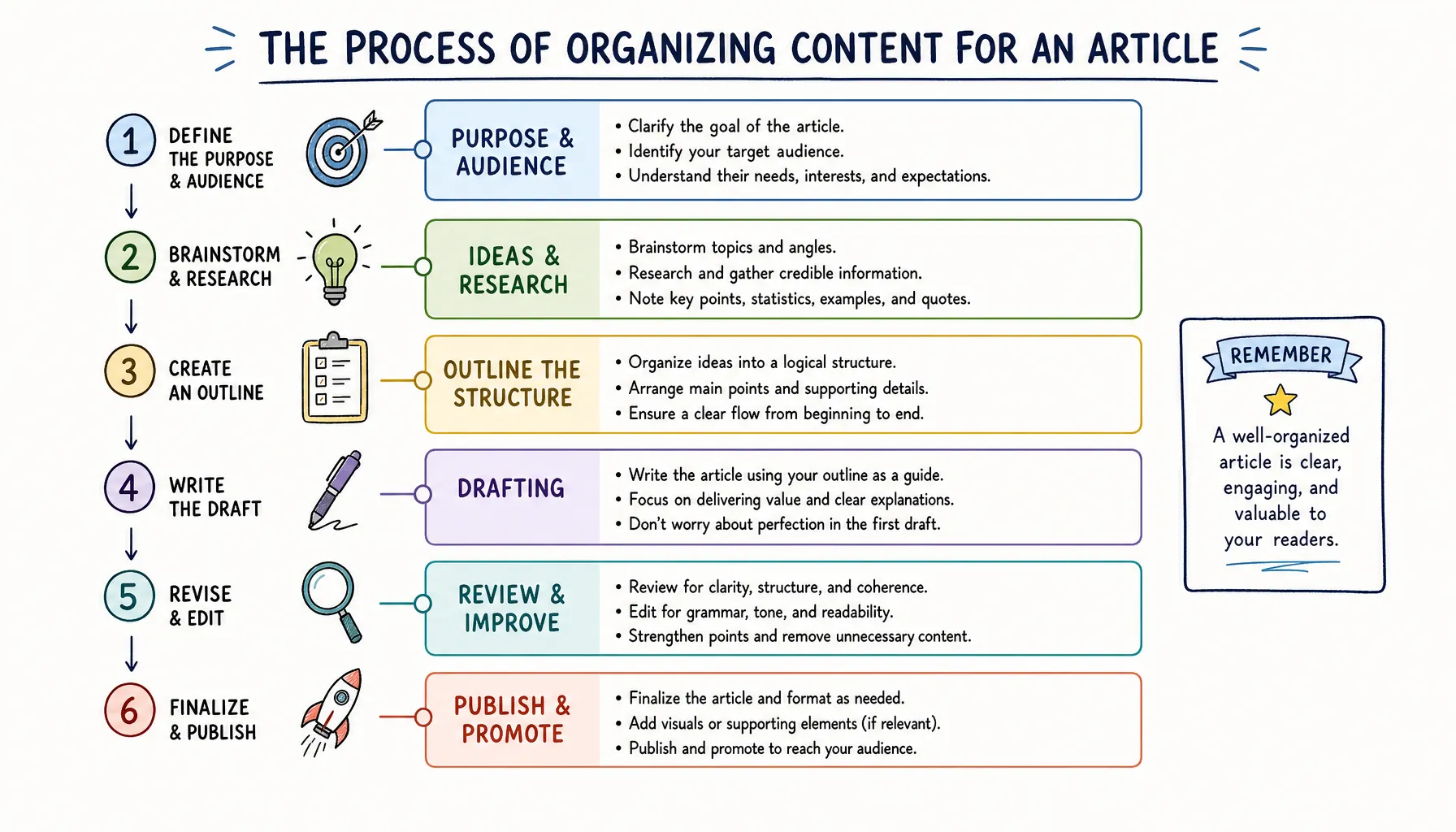
Write a one-sentence brief before drafting: “This article helps a first-time customer prepare a bread order for a gathering.” Use that sentence to decide what belongs. A tangent about the history of baking probably does not help this reader place an order.
Answer the main question near the beginning. Then organize the details into a few sections. Use descriptive headings and short paragraphs; use a list when readers need to compare items or follow steps. Give each section a clear job instead of repeating the introduction.
Here is a possible outline for the fictional bakery:
- Explain what information to have ready before contacting the bakery.
- List the questions to ask about available products, quantities, and collection.
- Explain where customers can confirm current prices and ordering deadlines.
- End with one practical next step: contact the bakery with the event date and requirements.
Check the outline against the brief. If a section does not help answer the chosen question, remove it or save it for another article. A narrow, complete answer is a reasonable goal for the first draft.
Verify the claims that matter
Separate advice from factual claims. “Write down your questions before calling” is a recommendation. A price, deadline, product specification, quotation, or statement about food safety needs an appropriate source. Ask whether an error could change the reader's decision, and give those claims particular attention.
For business details, confirm the information with the person or system responsible for it. For external claims, seek a relevant primary source and read the passage that supports the statement. Record the source link and the date checked. Do not add a citation simply because the page discusses the same general topic.
If you cannot support a claim, remove it, narrow it to what the source establishes, or clearly describe what remains uncertain. Adding “may” does not supply missing evidence. Avoid invented statistics, quotations, testimonials, and promises about results.
Keep fact review focused on material claims. Opinions, clearly labeled fictional examples, and ordinary editorial choices do not need to become separate approval tasks. When a claim needs a decision, record the exact sentence, the concern, and the action needed to resolve it.
Review the draft and prepare the handoff
A worked fictional example
The bakery's opening could read: “Before ordering bread for a gathering, note your event date, approximate guest count, and any requirements you want to discuss. Ask us what is available, when to order, and how collection works. Confirm the final products, price, and collection details with us before placing the order.”
This example gives the reader a next step without inventing a price, ordering deadline, or product guarantee. The bakery would still need to review it against its actual process before using it. If it adds specific product or dietary information, that information needs separate verification.
Check the saved article, not just the editor
Read the draft aloud or ask a colleague to review it. Replace vague promises with specific instructions. Check that the example is labeled, links point to the intended sources, and headings describe the sections beneath them.
Save the article, reopen it, and inspect the version you intend to deliver. Check the downloaded formatting too: headings, lists, links, and images should remain understandable. Choose who will approve publication and where the final article will appear.
Before you publish
- Answer one clear customer question.
- Label fictional examples and remove private customer details.
- Verify material factual claims and remove unsupported promises.
- Check saved edits, source links, and download formatting.
- Approve the final article and its publication destination.
