
Why Solo Founders Need Streamlined Content Reviews
Solo founders face the constant challenge of balancing multiple roles, from product development to customer support. Content marketing, while crucial for growth and brand awareness, often competes with other urgent priorities. A streamlined weekly content review is essential for maintaining a consistent message and achieving strategic business objectives. Without an efficient process, founders risk wasting valuable hours that could otherwise be dedicated to innovation or customer engagement, undermining both morale and output.
An optimized content review doesn't mean cutting corners. Instead, it involves setting clear boundaries and leveraging lightweight workflows. For instance, many solo founders now schedule a dedicated 30–60-minute block each week to assess what’s working, gather actionable insights, and plan for the upcoming week. This concise routine can significantly enhance content consistency, prevent strategic drift, and reduce decision fatigue, all while preserving the 'maker time' needed for core business activities [1].
Adopting this approach offers both immediate and long-term benefits. In the short term, founders are less likely to feel overwhelmed, leading to more sustainable content creation. Over time, this rhythm supports stronger brand equity and positions the business for scalable marketing initiatives as it grows. Ultimately, a disciplined and focused content review empowers solo founders to stay agile and responsive in a competitive environment.
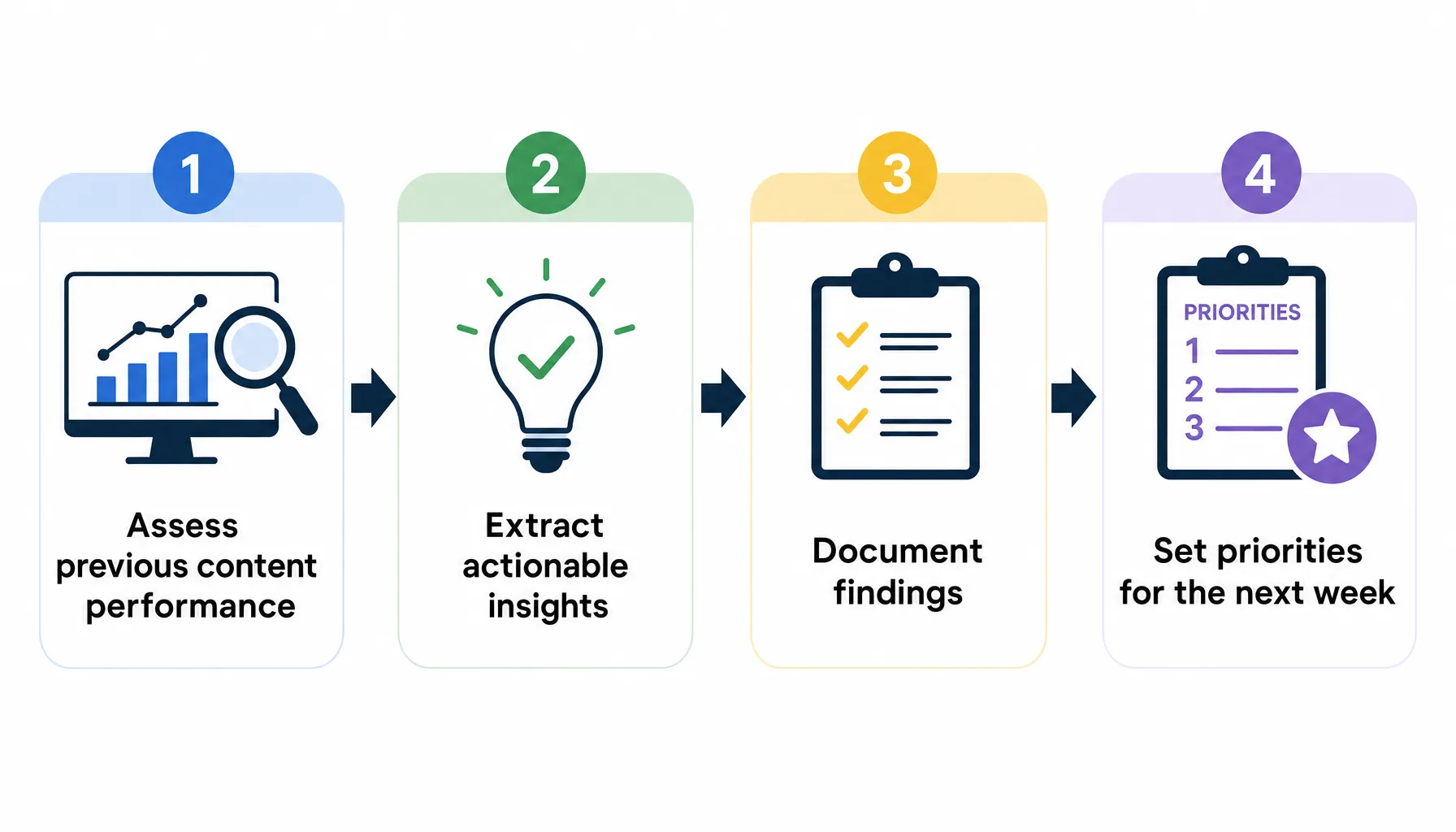
The 30–60 Minute Weekly Content Review Workflow
The key to running an effective content review as a solo founder lies in structure and preparation. Begin by allocating a specific, recurring time slot each week—ideally when your energy and focus are highest. Start the session by quickly assessing the performance of content published during the previous week. Utilize built-in analytics from social platforms or website dashboards to identify standout posts and those that underperformed. This data-driven approach streamlines decision-making and highlights actionable trends without requiring deep analysis .
Next, extract one or two actionable insights. For example, if a particular blog post format or topic resonated, make a note of this for future planning. Conversely, content that missed the mark should be flagged for adjustment or experimentation. Document these findings in a simple template—many founders use a shared document or a low-code tool for this purpose. The final step is to set clear, achievable priorities for the next week, batching approvals or scheduling tasks where possible. Integrating AI-assisted tools for drafting and scheduling can further compress review time, allowing founders to focus on creative or strategic tasks instead of repetitive administrative work [3].
This compact, repeatable workflow keeps the review process aligned with broader business goals. It minimizes cognitive load and ensures that content marketing remains a growth driver rather than a time sink. Regularly refining this workflow based on personal preferences and available tools can yield even greater efficiency gains over time.
Tools and Templates: Making Reviews Lightweight and Actionable
Efficient content reviews depend heavily on the right combination of tools and templates. For many solo founders, simplicity is key—complex software can add friction instead of reducing it. Popular choices include spreadsheet templates for tracking content performance, AI-powered analytics dashboards for instant insights, and automation platforms that batch routine scheduling or approvals. These solutions allow founders to consolidate information, prioritize tasks, and stay organized with minimal manual effort [4].
A recommended starting point is a simple weekly review template that includes columns for key performance indicators, insights, and next steps. This template can be reused and adapted as the content strategy evolves. Additionally, incorporating low-code tools or no-code platforms enables solo founders to customize workflows without significant time investment. For those handling high content volumes, AI-assisted content planners can suggest optimal topics or timing, while scheduling tools automate posting across channels, further minimizing administrative overhead [5].
Founders are encouraged to periodically reassess their toolset to ensure it meets their evolving needs. Keeping the process lightweight and flexible maximizes adoption and long-term consistency. As the business grows, these foundational workflows and templates can scale, supporting efficient content management with minimal disruption.
Maintaining Consistency Without Sacrificing Creativity
One of the primary risks for solo founders is allowing consistency to override creativity, or vice versa. A robust weekly content review strikes a balance by establishing clear guardrails—such as messaging guidelines and tone of voice—while leaving space for experimentation. Scheduling regular slots for creative ideation alongside the review process can help founders remain innovative without veering off course. Over time, this practice builds a recognizable brand voice and fosters audience trust .
Additionally, using review sessions to set small, specific creative challenges—for example, testing a new content format or storytelling angle—can infuse the weekly workflow with fresh energy. Founders should track the impact of these experiments and integrate successful elements into their standard process. It's important to remain adaptable; what works today may shift as the audience grows or market trends evolve. By embedding flexibility within a consistent structure, solo founders can nurture both reliability and originality in their content marketing efforts [7].
Ultimately, the goal is to create a sustainable review habit that supports both efficiency and creative ambition. Consistent content reviews, paired with regular creative exploration, are a proven way to keep content marketing engaging and effective—without burning out or losing a full day every week.
Action Checklist: Your Next Steps for Smarter Reviews
To help solo founders kick off a streamlined weekly content review, here’s a practical checklist for immediate implementation:
- Block a recurring 30–60-minute slot in your calendar each week dedicated to content review.
- Set up a simple review template to track performance, insights, and next actions.
- Leverage at least one AI-powered or automation tool to assist with analytics, drafting, or scheduling.
By following this checklist, solo founders can ensure their content review process is both effective and sustainable. As the business and content needs evolve, founders should revisit and adapt these steps, keeping efficiency and strategic clarity at the forefront. Remember, the goal is not perfection but consistent, incremental improvement—each review brings new opportunities for learning and growth [3].
