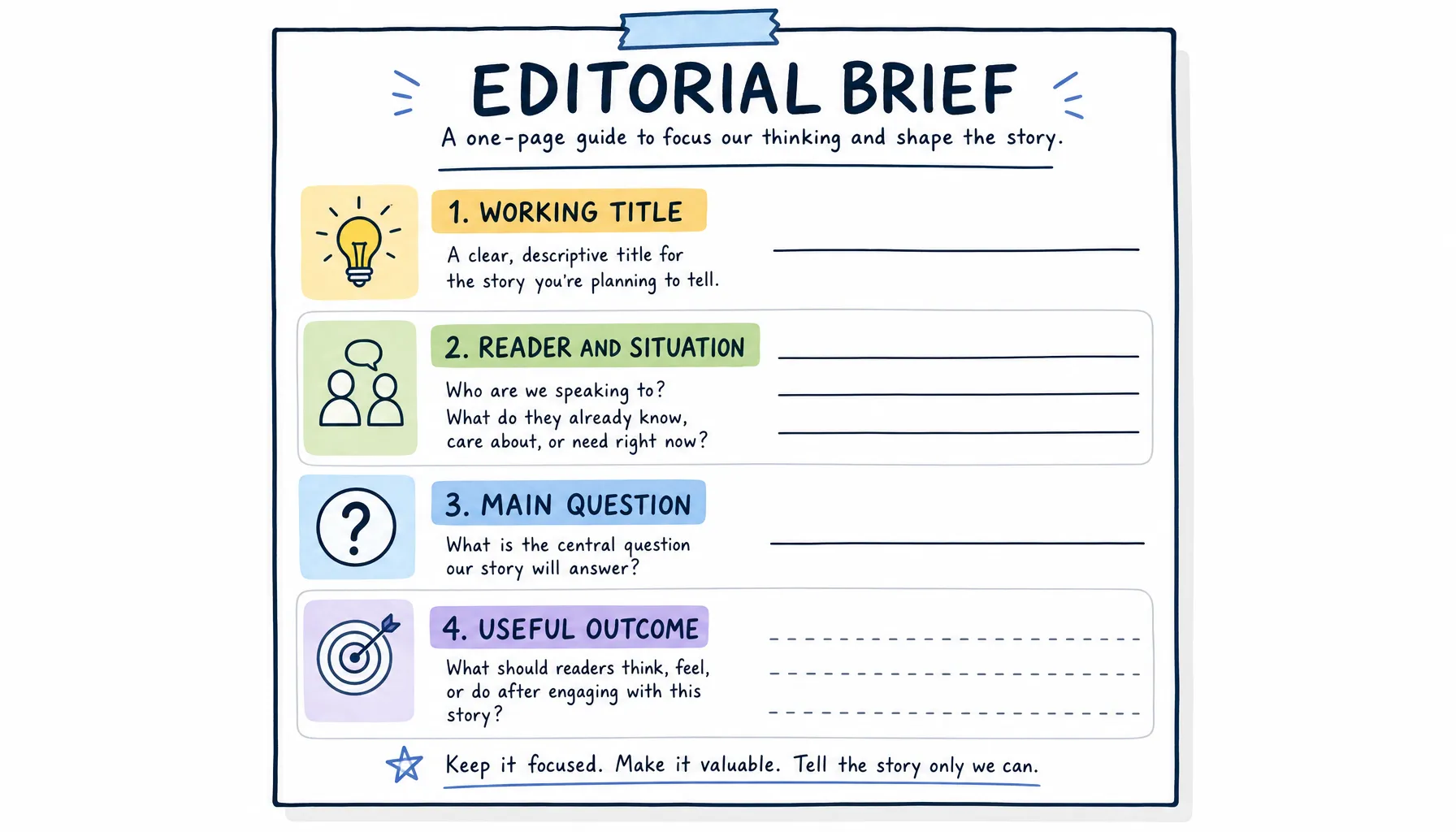
Decide what the article is for
Before you draft, write a short brief that names the reader, the question you want to answer, and the decision the article should support. Keep it to one page so you can refer to it while writing. Treat the page as a working agreement: if the assignment changes, update the brief before adding more material.
Start with one reader in one situation. “Small-business owners” may be too broad for the article you have in mind. Try “a shop owner preparing to hire a freelance writer for the first time.” Then name one useful outcome: what should that person be able to choose, prepare, or do after reading?
Write that outcome in ordinary language. Prefer “prepare a first draft of the assignment” over “improve content effectiveness.” You can use the outcome to decide which examples, explanations, and sections belong in the article.
Copy this blank brief
Copy the fields below into a document and replace the brackets. Keep most answers to a sentence or a few words. Leave a question visible when you need input; do not fill the gap with a guess.
- Working title: [Name the subject and the reader’s task.]
- Reader and situation: [Who is reading, and what are they trying to do right now?]
- Main question: [Write the single question this article will answer.]
- Useful outcome: [What should the reader be able to decide, prepare, or do?]
- Central recommendation: [State the main advice in one sentence.]
- Include: [List the essential points, in the order the reader needs them.]
- Required deliverables: [Name any template, example, comparison, or checklist that must appear.]
- Supporting material: [List supplied notes or sources. Mark anything that still needs confirmation.]
- Leave out: [Name nearby topics, claims, or offers that would distract from this assignment.]
- Format and length: [Specify the article type, word range, headings, and any layout needs.]
- Voice: [Describe how the article should sound, with one concrete instruction.]
- Next step: [Choose one appropriate action for the reader, or write “none.”]
- Placement: [Name where the article will appear and any relevant surrounding context.]
- Owner and review: [Name who drafts, who answers open questions, and who approves the finished article.]
If the page becomes crowded, shorten the answers or move background notes into a separate document. Keep the assignment itself together. Give the writer the relevant supporting material alongside it.
A filled example for a small business
The following example is fictional. Imagine a neighborhood bicycle repair shop planning an article for people arranging their first appointment. The brief proposes an assignment; it does not describe a real shop’s services or policies.
- Working title: What to Prepare Before Your First Bicycle Service Appointment.
- Reader and situation: A new customer who wants to contact the shop but is unsure what to say.
- Main question: What information should I prepare before asking about an appointment?
- Useful outcome: The reader can write a short description of their concern and a list of questions for the shop.
- Central recommendation: Describe what you have noticed and ask the shop what it needs before you visit.
- Include: A space to describe the concern, questions about arranging a visit, and a reminder to confirm the shop’s instructions directly.
- Required deliverables: A copyable inquiry outline, one clearly fictional filled example, and a short preparation checklist.
- Supporting material: Ask the owner for the shop’s current appointment instructions before describing its process.
- Leave out: Repair instructions, diagnosis, prices, turnaround promises, and comparisons with other shops.
- Format and length: A practical guide of 500–700 words, including the inquiry outline and checklist.
- Voice: Friendly and direct; explain any unfamiliar terms.
- Next step: Invite the reader to contact the shop with their prepared questions.
- Placement: A proposed article beside the shop’s appointment information.
- Owner and review: The writer drafts; the shop owner supplies and approves all details about the shop.
Adapt the fields to your own assignment. For a different business, change the reader’s situation and desired outcome before changing the headline.
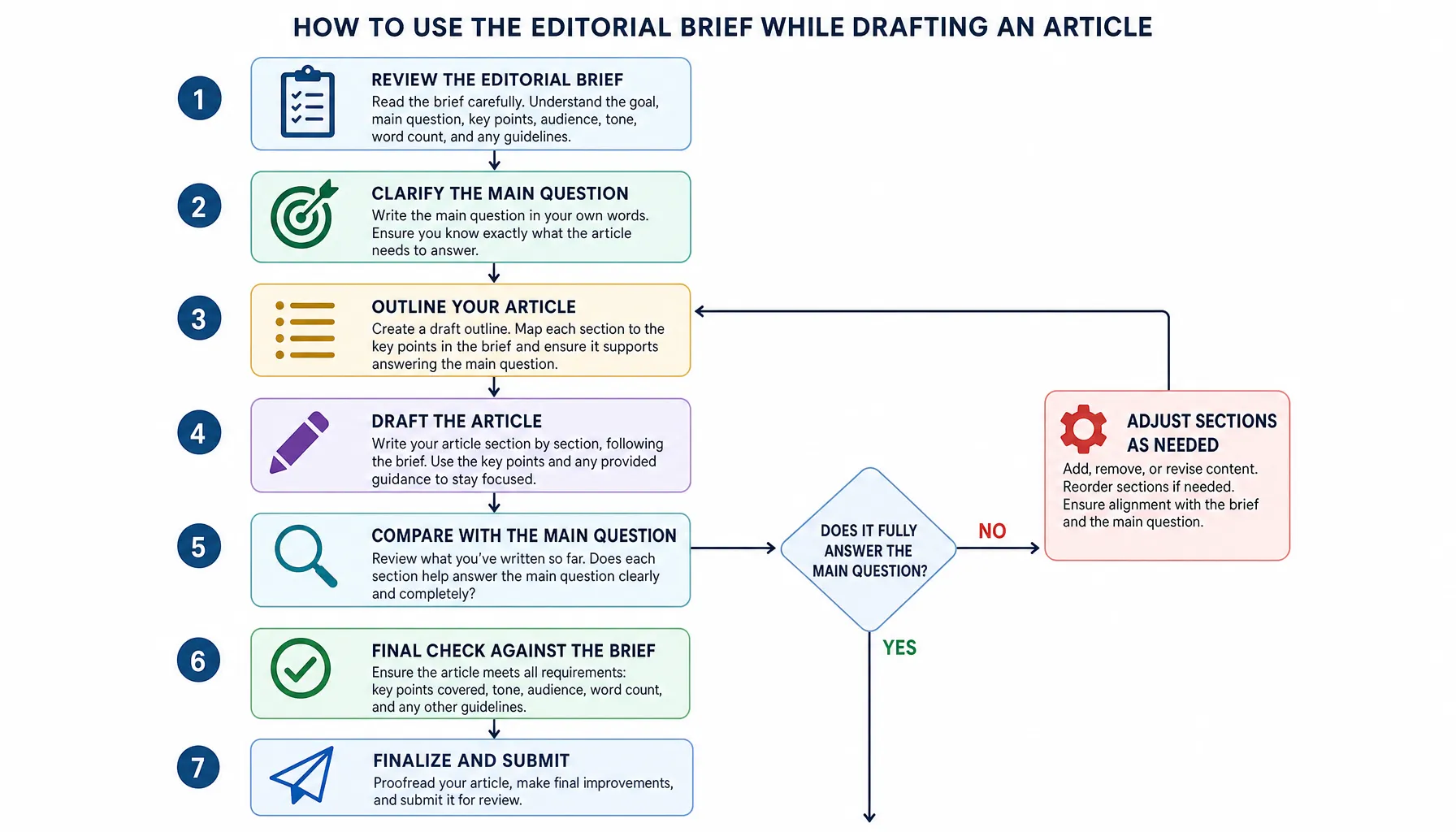
Use the brief while drafting
Build the first outline from the “Include” and “Required deliverables” fields. Reserve space for the promised example or template before writing a long introduction. If the brief asks for a checklist, write its actual items early enough to judge whether they are useful.
As you draft, compare each section with the main question. Shorten a section that repeats earlier advice. Put an interesting but unrelated idea into a future-article note. If you discover that the assignment needs a different focus, discuss that change with the person approving the brief.
During review, point to the field that needs attention. For example, ask for the missing inquiry outline or a clearer explanation of the reader’s next step. Name the requested change plainly.
Check the brief before handing it over
- Name one reader: Can you describe their immediate situation?
- Choose one question: Can the planned article answer it within the word limit?
- Specify the output: Have you named every required template, example, and checklist?
- Mark open questions: Does each missing detail have someone responsible for answering it?
- Set the review: Do the writer and approver agree on the assignment and its limits?
