
The Psychology Behind Consumer Rebellion: Why Bizarre Campaigns Work
Reverse psychology campaigns rest on a fascinating foundation of consumer psychology, particularly reactance theory. This theory suggests that when individuals perceive their freedom of choice is being restricted, they experience an emotional response known as reactance, motivating them to reassert their autonomy by doing exactly what is discouraged. Marketers, attuned to this phenomenon, craft messages that seem to limit choice or outright advise against certain behaviors—'Don't buy this jacket,' for example—to elicit the very opposite reaction from consumers. By subtly challenging the audience, brands can transform traditional advertising into an engaging mental game, leading to increased attention and, often, sales.
Research shows that consumers who feel manipulated by standard sales tactics are more likely to rebel, seeking out brands that offer transparency or even challenge their intelligence with tongue-in-cheek messaging. This technique capitalizes on our inherent desire for independence and self-determination. The result is campaigns that stand apart, stimulate discussion, and deepen brand loyalty through shared understanding of the joke or contrarian stance. In an age where advertising saturation has bred skepticism, reverse psychology provides a refreshing—and sometimes subversive—alternative to direct persuasion.
It is important to recognize, however, that such approaches require a nuanced understanding of audience sensibilities and cultural context. If poorly executed or misaligned with brand values, reverse psychology campaigns can alienate or confuse potential customers. Effective campaigns acknowledge this delicate balance, using humor or authenticity to reduce the risk of backlash. By walking this fine line, marketers can successfully tap into consumers’ rebellious instincts and foster a sense of partnership against the norms of conventional advertising.
Section summary
Reactance theory explains how reverse psychology in advertising prompts consumer rebellion and deeper engagement.
Reverse psychology messaging on city billboard playfully challenging consumers.

Case Study Analysis: Brands That Successfully Said 'Don't'
Throughout modern marketing history, several brands have taken the bold step of using contrarian messages as the centerpiece of their campaigns, often with remarkable success. Patagonia’s 2011 'Don’t Buy This Jacket' campaign is a prime example. Instead of encouraging holiday shoppers to purchase its popular fleece, Patagonia urged restraint, highlighting the environmental costs of overconsumption. Far from hurting sales, this candid approach resonated with the company’s environmentally conscious target audience, resulting in increased sales and an enhanced brand reputation for authenticity and social responsibility [1].
Another striking case is Domino’s Pizza’s 'Oh Yes We Did' campaign. After candidly acknowledging criticism of its pizza quality in a national campaign, Domino’s invited customers to try their improved recipe. By adopting a brutally honest tone and showcasing real feedback, Domino’s not only rebuilt consumer trust but also saw significant sales growth. This strategy demonstrated how reverse psychology, paired with transparency and self-improvement, can overcome negative perceptions and spark renewed interest in a brand.
Similarly, Marmite’s polarizing 'Love It or Hate It' positioning playfully embraces consumer division, encouraging debate and social sharing. By inviting strong opinions and leveraging the product’s divisive flavor, Marmite cultivates a devoted fanbase while keeping its brand top of mind. Each of these cases reveals how embracing vulnerability and contrarian messaging can foster authenticity and drive exceptional results, provided the brand’s core values and audience expectations are closely aligned.
Section summary
Brands like Patagonia and Domino’s have leveraged reverse psychology messaging to build authenticity and spark sales growth.
Patagonia's campaign asked customers not to buy, igniting conversation and loyalty.
The Art of Strategic Self-Sabotage: Memorable Contrarian Messaging
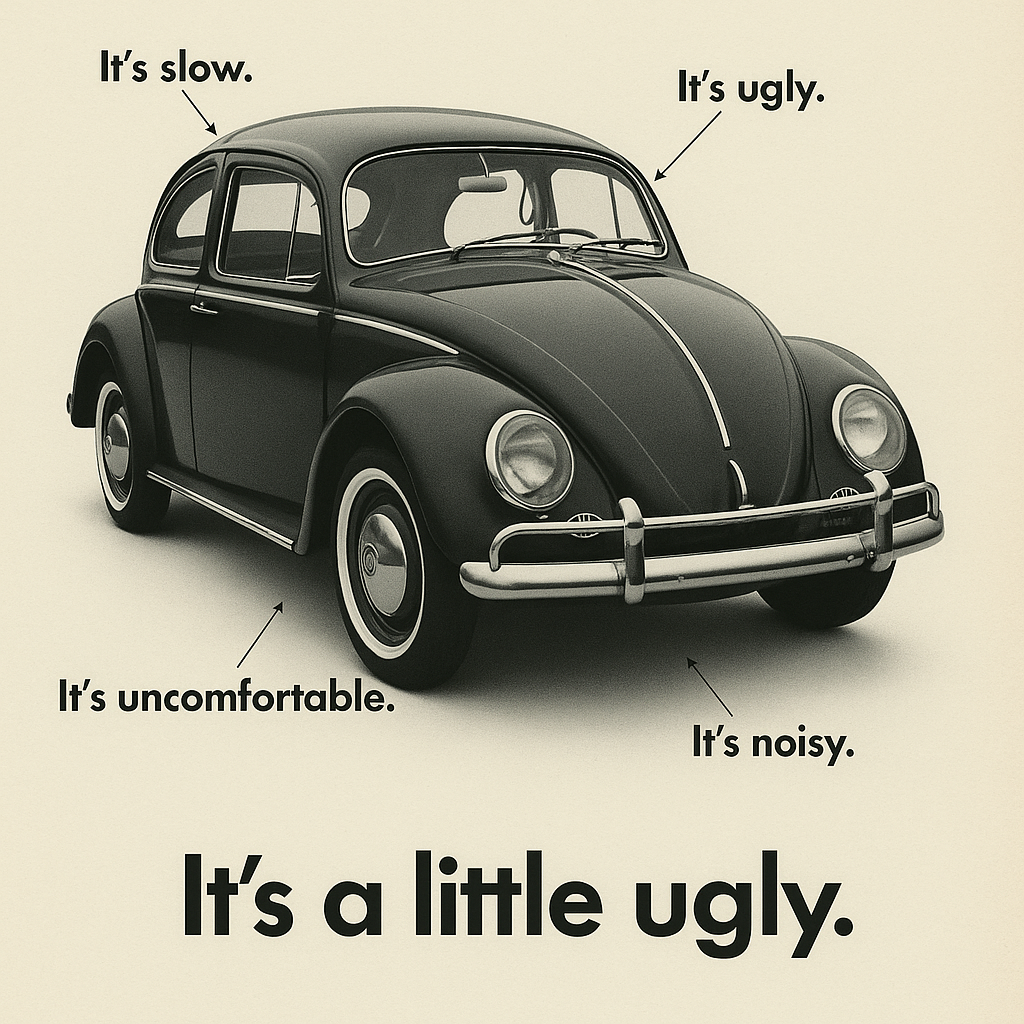
While direct opposition to sales goals may seem counterintuitive, the artful use of strategic self-sabotage can make campaigns unforgettable. Humor, self-deprecation, and even hyperbolic deception often serve as the heart of these memorable efforts. Volkswagen’s classic ads, for instance, openly acknowledged the perceived drawbacks of its Beetle—its size, shape, and lack of glamour. By embracing these limitations with wit and charm, Volkswagen built a powerful identity centered on honesty and relatability, capturing the affection of consumers weary of exaggerated claims.
Another notable example is Isuzu’s 'Joe Isuzu' campaign from the 1980s. Featuring a salesman who delivered blatantly false—and obviously exaggerated—claims about the vehicles, the campaign used parody to undermine traditional car advertisements. Audiences, recognizing the farce, engaged with the brand on a deeper level, turning the anti-hero spokesperson into a cultural phenomenon. This type of self-aware advertising fosters a sense of insider camaraderie, rewarding consumers for being in on the joke.
These approaches require deft execution and an understanding of brand voice. While humor and self-sabotage can humanize a company, they must not cross into cynicism or erode trust. When done well, they build strong emotional connections, make ads more shareable, and encourage audiences to look past surface-level claims to the values beneath. Ultimately, strategic self-sabotage leverages the unexpected to create memorable, authentic brand moments that stand out in the crowded media landscape.
Section summary
Strategic humor and self-sabotage in advertising can build authentic connections and lasting brand impressions.
Volkswagen's self-deprecating ads embraced flaws to foster authenticity.
Implementation Framework: Building Your Own Contrarian Campaign
Designing a successful reverse psychology campaign demands a systematic, thoughtful approach. The first critical step is understanding the target audience: What are their values, sensitivities, and expectations? Conducting detailed audience research ensures messaging will be received as intended and not misinterpreted as insincere or dismissive. Marketers must also assess cultural context and current market dynamics, as what works in one region or industry may backfire in another.
The next stage involves message crafting. Effective reverse psychology campaigns hinge on clarity and intention. Whether the goal is to spark curiosity, challenge conventions, or drive home a social message, the campaign’s tone—be it humorous, earnest, or ironic—should align with brand identity. For example, a luxury brand might deploy contrarian messages differently than a value-oriented company. Experimentation with formats—such as interactive digital ads, guerilla marketing, or social media challenges—can amplify reach and engagement.
Strategic planning is crucial. Marketers must anticipate potential risks and set clear objectives and metrics for success, from engagement rates to brand sentiment shifts. A multidisciplinary team, including creative, legal, and customer support, should be involved to foresee and mitigate unintended consequences. Ultimately, a successful contrarian campaign balances risk with creativity, and remains true to the brand’s authentic voice and values, building lasting trust with its audience.
Section summary
Reverse psychology campaigns succeed through careful audience analysis, message alignment, and risk mitigation strategies.
Cross-functional teams strategize to craft effective reverse psychology campaigns.
Measuring Impact and Avoiding Backfire: The Risk-Reward Balance
Despite their potential for high engagement, reverse psychology campaigns carry unique risks. Measuring their success requires a multidimensional approach. Key performance indicators (KPIs) may include not only sales uplift, but also engagement metrics such as social media mentions, share of voice, and sentiment analysis. Surveys and qualitative feedback can help brands understand whether their messaging landed as intended or risked alienating segments of the audience.
Brands should be vigilant for signs of backfire, such as increased negative sentiment or confusion about brand values. Transparency and willingness to course-correct are vital; acknowledging missteps publicly can sometimes reinforce authenticity and loyalty. Implementing safeguards, such as focus group testing or phased rollouts, may reduce the likelihood of significant backlash. Additionally, brands should regularly revisit their campaign objectives and adapt tactics in response to changing market conditions and feedback.
While the rewards of memorable, conversation-starting campaigns can be substantial, marketers must approach reverse psychology strategies with humility and adaptability. There is always a possibility that a message intended to provoke engagement may be misunderstood or perceived as manipulative. Brands that balance creativity with responsiveness are best positioned to harness the benefits of these unconventional tactics while safeguarding reputation and long-term trust.
Section summary
Reverse psychology campaign impact is measured by holistic KPIs, with vigilant risk management to prevent backlash.
Real-time analytics help marketers track campaign sentiment and effectiveness.
Conclusion: The Enduring Appeal and Future of Contrarian Marketing
Reverse psychology in advertising continues to intrigue both marketers and consumers due to its inherent playfulness and psychological insight. As audiences grow ever more sophisticated and advertising environments become increasingly cluttered, the power of a well-executed contrarian message stands out. Brands that invite audiences to challenge, question, or even rebel against their own messaging foster engagement, authenticity, and deeper relationships. The appeal lies in the shared wink between brand and consumer, a signal that both parties are aware of the conventions being subverted.
Looking ahead, the future of contrarian marketing will likely demand even greater sensitivity to audience diversity, digital culture shifts, and evolving consumer expectations. Marketers may increasingly rely on data-driven insights and iterative testing to refine messaging and ensure alignment with values. While not every brand or product is suited to this bold approach, those that succeed do so by listening closely to their audience and balancing risk with a commitment to authenticity and respect.
Ultimately, the effectiveness of reverse psychology in bizarre campaigns lies in its ability to start conversations, build communities, and turn advertising into an interactive experience. As long as brands remain attentive and responsive, contrarian marketing will continue to captivate, entertain, and drive meaningful business outcomes.
Section summary
Contrarian campaigns thrive on authenticity and adaptability, shaping the evolving future of consumer-brand engagement.
Inclusive discussions drive the next generation of reverse psychology campaigns.
