Unlocking Creativity at Home: AI as a Family Activity Partner
As artificial intelligence (AI) becomes more embedded in everyday life, it opens new doors for families seeking fresh, creative ways to bond and learn together. Leveraging AI-driven tools and platforms, families can transform traditional pastimes into innovative experiences that foster curiosity, problem-solving, and joy for all ages. By integrating technology with shared activities, households can benefit from guided art projects, personalized storytelling, and collaborative games—each adapted to individual skills and interests. AI’s adaptive nature ensures inclusivity, catering to diverse abilities and preferences within family groups.
Importantly, AI-powered activities are not designed to replace meaningful face-to-face interaction, but rather to augment and inspire it. Many families report that using AI as a co-creator or facilitator helps level the playing field, allowing younger and older participants alike to contribute equally to group projects. Examples include virtual painting assistants, AI-driven music composition apps, and intelligent story generators that spark imaginative play. With AI’s support, families can explore new creative frontiers while enjoying valuable time together.
As this landscape continues to evolve, families may wish to approach these technologies thoughtfully, choosing platforms that prioritize privacy, child safety, and ease of use. By making informed choices, households can maximize the positive impact of AI-powered creativity without compromising personal values or digital security. Ultimately, the goal is to inspire connection, learning, and shared discovery through technology-enhanced play.
Summary
AI-driven tools can help families enhance creativity and connection by supporting innovative, collaborative activities at home.
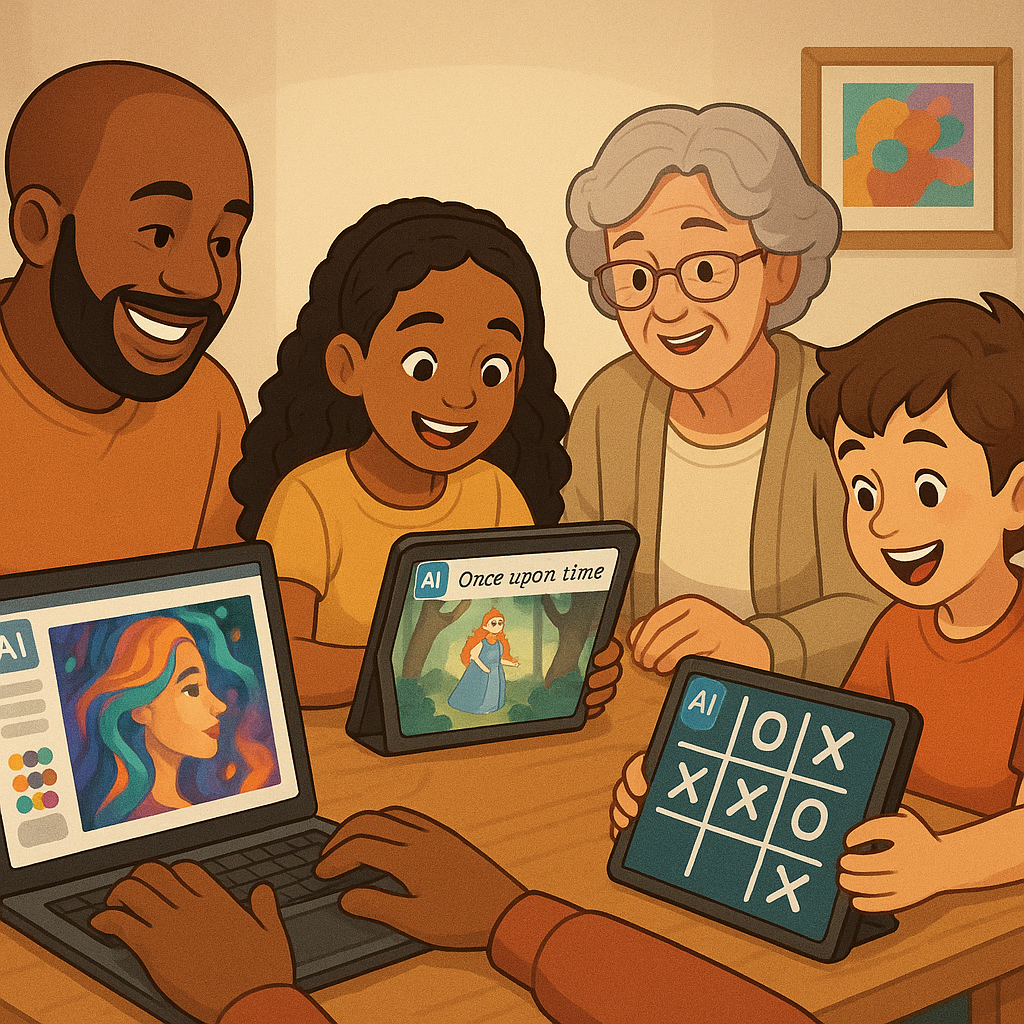
A family collaborates on an art project using an AI-powered tablet application.
AI Storytelling: Bringing Family Narratives to Life
Storytelling lies at the heart of family traditions, and AI is revolutionizing how stories are created and shared in the home. Modern AI tools can craft personalized narratives by integrating names, settings, and themes unique to each family. By guiding children through the story creation process, these platforms encourage literacy, imagination, and emotional expression. For example, children might co-author an interactive bedtime tale or invent characters based on family members, with the AI suggesting plot twists and dialogue to keep everyone engaged.
Families may use text-to-speech and language generation features to make stories accessible for non-readers or multilingual households, further broadening participation. Moreover, AI-generated stories can easily be adapted for different reading levels, ensuring inclusivity for younger siblings and grandparents alike. While AI can provide fresh ideas and structure, it is essential to maintain space for individual voices and creativity, so each participant feels valued in the storytelling process.
Research suggests that co-creating stories strengthens family bonds and helps children develop confidence in language skills. Integrating AI may streamline this process, offering prompts, visualizations, and even audio enhancements. Families could consider setting boundaries around screen time and content to ensure that technology enhances, rather than overshadows, genuine connection. This balance helps foster a healthy digital environment that prioritizes meaningful engagement.
Summary
AI-powered storytelling tools can enhance family bonding by supporting personalized, inclusive narrative experiences for all ages.
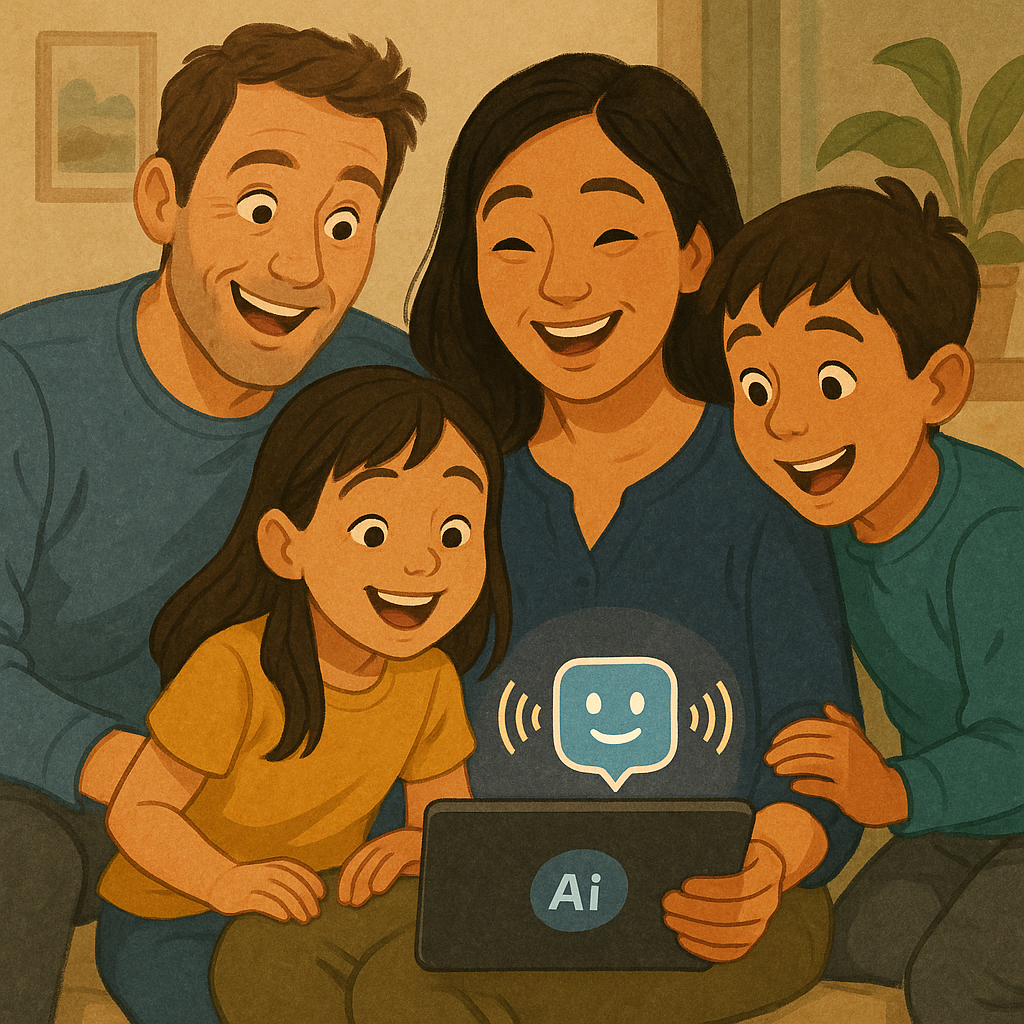
Parents and children listen to an AI-generated bedtime story together.

Collaborative Art and Music: AI as a Creative Assistant
Visual art and music offer families avenues to express themselves, and AI now amplifies these experiences by acting as a collaborative partner. Drawing applications with AI guidance can suggest new techniques, color palettes, or styles tailored to a user’s ability, while music composition tools can help families compose melodies without prior training. These technologies make creative exploration more accessible, especially for those who might feel intimidated by traditional art forms.
For example, children and adults can co-create digital paintings, experimenting with AI-suggested brushes or motifs that reflect their collective vision. Similarly, AI music platforms allow families to layer rhythms and harmonies, then instantly play back their unique composition. By embracing these tools, families can shift the focus from perfection to experimentation and process, celebrating effort and collaboration over finished results.
Accessibility features are central to many AI-powered creative apps, enabling participation for family members with diverse abilities. Tools that offer voice control, adaptive interfaces, and customizable templates can help ensure everyone is included. As families explore these platforms, it’s wise to remain mindful of the data privacy and security policies associated with creative apps. Encouraging open discussion about digital citizenship supports a positive, informed creative journey for all.
Summary
AI-facilitated art and music activities foster creativity and inclusivity, enabling families to collaborate and experiment regardless of skill level.
A family enjoys making a digital artwork together with AI suggestions.
AI-Enhanced Games and Puzzles: Engaging All Ages
Games and puzzles have long been central to family entertainment, and AI is breathing new life into these activities by adapting gameplay to suit players’ interests and abilities. AI-driven board games, trivia apps, and virtual escape rooms can tailor difficulty levels, provide real-time hints, and adjust storylines in response to each participant’s input. This ensures that everyone—regardless of age or experience—remains challenged, engaged, and included.
Some AI-powered games offer cooperative challenges, where families must solve riddles or complete quests as a team, fostering communication and critical thinking. Others use natural language processing to create conversational experiences, making digital play more immersive. Importantly, many platforms feature parental controls and content filters, supporting safe and age-appropriate engagement for all household members.
Families may wish to alternate between AI-facilitated and traditional analog games, using technology to introduce new genres and learning opportunities while also valuing screen-free time. In addition, discussing the mechanics and ethics behind AI-driven games can prompt deeper understanding of technology’s role in entertainment and society. Such conversations empower children to think critically and responsibly about their digital experiences.
Summary
AI-powered games and puzzles can personalize entertainment for families, fostering teamwork and learning across generations.
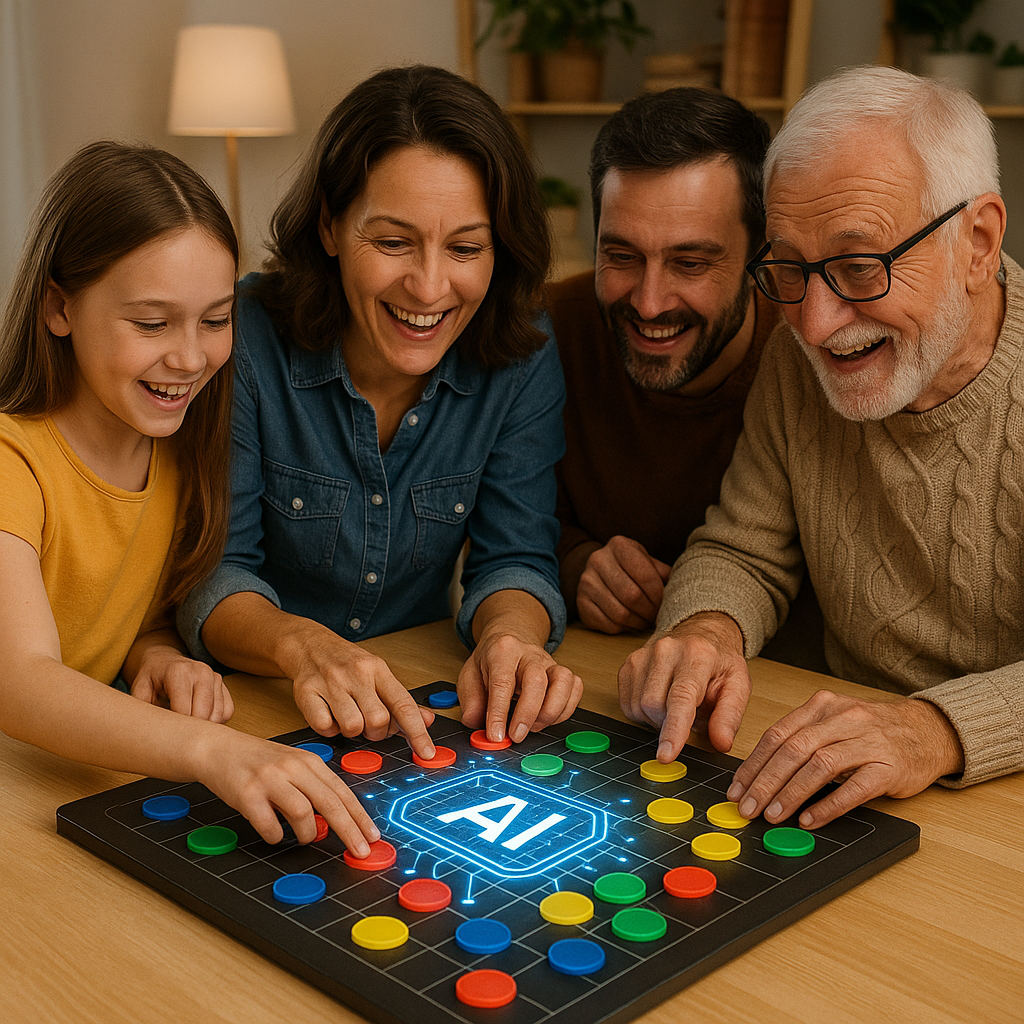
Multiple generations work together on an AI-enhanced board game challenge.
STEM Learning Adventures: Exploring Science Together with AI
AI-driven educational platforms are making it easier than ever for families to explore STEM (science, technology, engineering, and mathematics) topics together. These tools offer interactive simulations, virtual labs, and guided experiments that encourage hands-on learning at home. By personalizing content to match each participant’s age and skill level, AI can demystify complex scientific concepts and make learning a fun, shared adventure.
For example, families can use AI-powered apps to design and test simple machines, visualize astronomy data, or conduct safe chemistry experiments with virtual feedback. Such activities foster curiosity and analytical thinking while supporting collaboration between siblings, parents, and even grandparents. Many of these platforms include built-in progress tracking and suggestions for extending learning beyond the screen, helping families integrate scientific exploration into daily life.
It is important to note that while AI can facilitate STEM learning, guidance from adults remains crucial for contextualizing information and ensuring accuracy. Families may wish to pair AI-powered lessons with real-world exploration, such as nature walks or at-home experiments, to reinforce learning outcomes and keep engagement high. Thoughtful use of these resources can spark a lifelong passion for discovery and problem-solving.
Summary
AI-powered STEM tools provide families with engaging, interactive learning experiences that make complex topics accessible and enjoyable.
A family collaborates on a virtual science experiment with AI guidance.
Building Healthy Digital Habits: Ethics and Mindful Use of AI
As families embrace AI-powered activities, it is vital to cultivate healthy digital habits and ethical awareness. Setting clear boundaries around technology use, discussing data privacy, and prioritizing offline connection all contribute to a balanced approach. AI can be a valuable tool for creativity and learning, but mindful use is essential to prevent overreliance and ensure technology remains a positive influence within the home.
One strategy is to co-create a family technology agreement that outlines acceptable use, screen time limits, and shared responsibilities for digital well-being. Open conversations about how AI systems work, including their limitations and potential biases, empower children to become critical consumers and responsible users of technology. Families may also want to research platforms that align with their values around inclusivity, accessibility, and safety.
In addition, encouraging reflection on both the joys and challenges of AI-powered activities helps families adapt and grow together. By integrating digital literacy discussions with hands-on play, households can ensure technology supports, rather than detracts from, meaningful relationships and lifelong learning. As AI continues to evolve, ongoing dialogue and adaptability will be key to harnessing its benefits responsibly.
Summary
Mindful, ethical use of AI in family activities supports healthy digital habits and strengthens family bonds.
A family creates a technology agreement to support healthy AI use at home.
Future Trends: The Evolving Role of AI in Family Life
Looking ahead, AI’s role in family activities is likely to expand in scope and sophistication, offering even more personalized, immersive experiences. Advances in machine learning and natural language processing could soon enable fully interactive virtual family game nights, adaptive educational journeys, and co-created multimedia projects. However, it is important to acknowledge that these trends remain speculative, and the speed and direction of change will depend on technological, societal, and regulatory factors.
Experts suggest that future AI platforms may offer greater customization, real-time emotional feedback, and seamless integration with smart home environments. For families, this could mean more inclusive, dynamic experiences tailored to evolving interests and needs. At the same time, questions around digital equity, privacy, and ethical design will become increasingly important. Engaging in ongoing learning and dialogue will help families navigate new opportunities and challenges as they arise.
In summary, families can look forward to a future in which AI acts as both a creative partner and a facilitator of deeper connection. By approaching emerging technologies with curiosity and care, households can continue to leverage AI to enhance creativity, learning, and togetherness in the years ahead.
Summary
AI’s evolving capabilities may shape more personalized and connected family activities, though thoughtful, ethical engagement will remain essential.
A future family enjoys immersive, AI-powered activities in a smart home environment.
