The Landscape of Polarized News Consumption
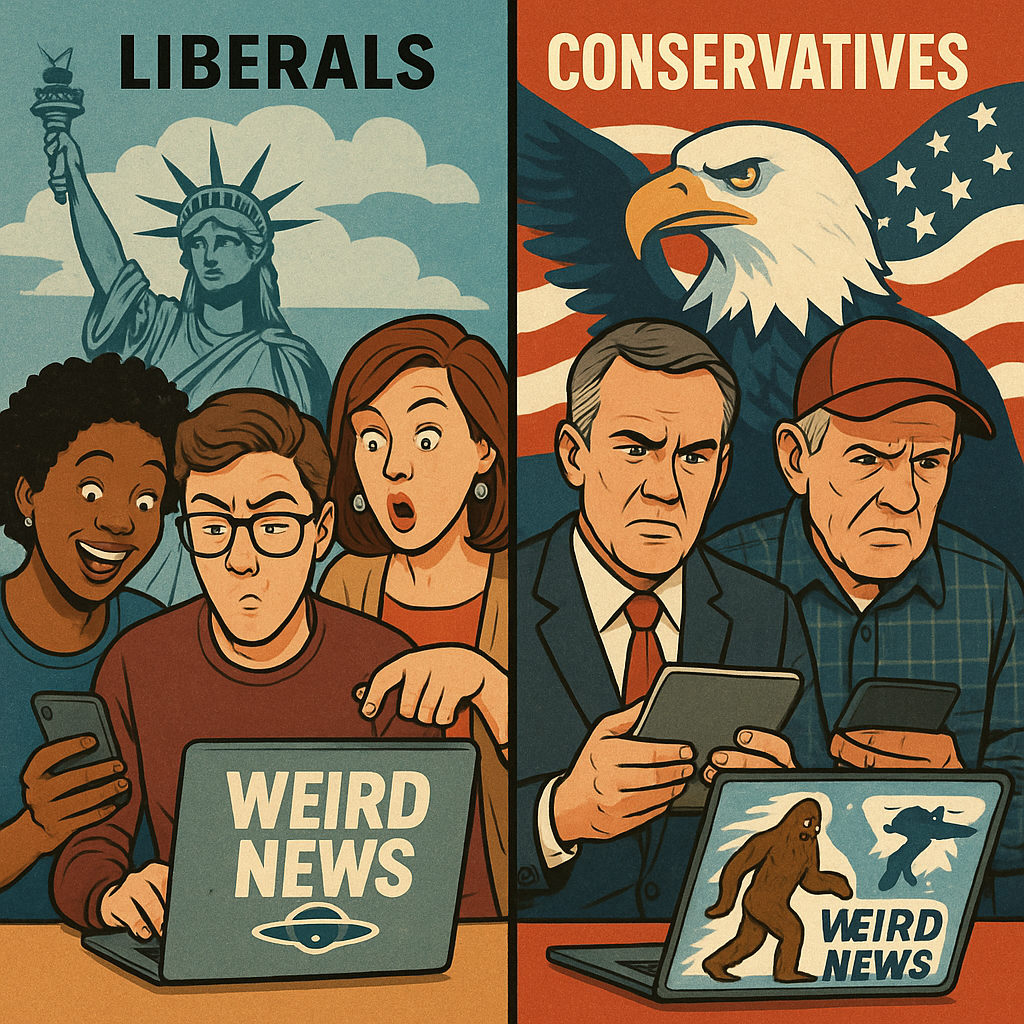
In today’s rapidly shifting media ecosystem, the polarization of news consumption is not limited to hard news or political reporting. Increasingly, even the oddities and viral stories often dubbed as “weird news” are filtered through ideological lenses. This phenomenon reflects a growing divide in how liberals and conservatives select, interpret, and share unusual stories online. The fragmentation of news sources means that a seemingly lighthearted or bizarre event can become a flashpoint for polarized reactions, depending on how it is framed and circulated by different outlets and audiences.
For example, a story about a rare animal sighting may be covered by left-leaning sites with an emphasis on climate change or conservation, while right-leaning outlets might highlight themes of tradition or skepticism about environmental reporting. Viral hoaxes, urban legends, or sensational science stories often acquire divergent meanings as they travel across partisan networks. This divergence is reinforced by algorithms that suggest content based on users’ previous behaviors, effectively creating echo chambers where certain themes and interpretations flourish within like-minded communities [1].
As a result, weird news is no longer a neutral domain of amusement or curiosity. Instead, it serves as a subtle battleground for cultural narratives and group identities. Readers are increasingly aware of which stories “fit” their worldview, sometimes even unconsciously selecting and sharing content that aligns with their group’s broader perspectives. The impact is more than anecdotal; studies have shown measurable differences in the types of stories engaged with, and the framing of those stories, based on ideological leanings [2]. This polarization in weird news consumption contributes to a more fragmented public sphere, where even the most unusual events become grounds for division.
Section Summary
Polarized news habits now influence the consumption and sharing of weird news, shaping divergent reactions and deepening social divides.
Measurement and Mechanisms: How and Why Polarization Manifests
Understanding polarization in weird news consumption requires reliable measurement methods and a grasp of the underlying mechanisms driving these divides. Two primary approaches are prevalent: self-reported surveys and behavioral tracking. Surveys ask participants to describe their media habits and ideological leanings, offering insight into perceived preferences and biases. However, such self-reports can be influenced by social desirability or imperfect recall, potentially obscuring true behaviors. Behavioral tracking, in contrast, leverages web browsing data or social media logs to objectively record what users view, click, and share, revealing more granular patterns of engagement [3].
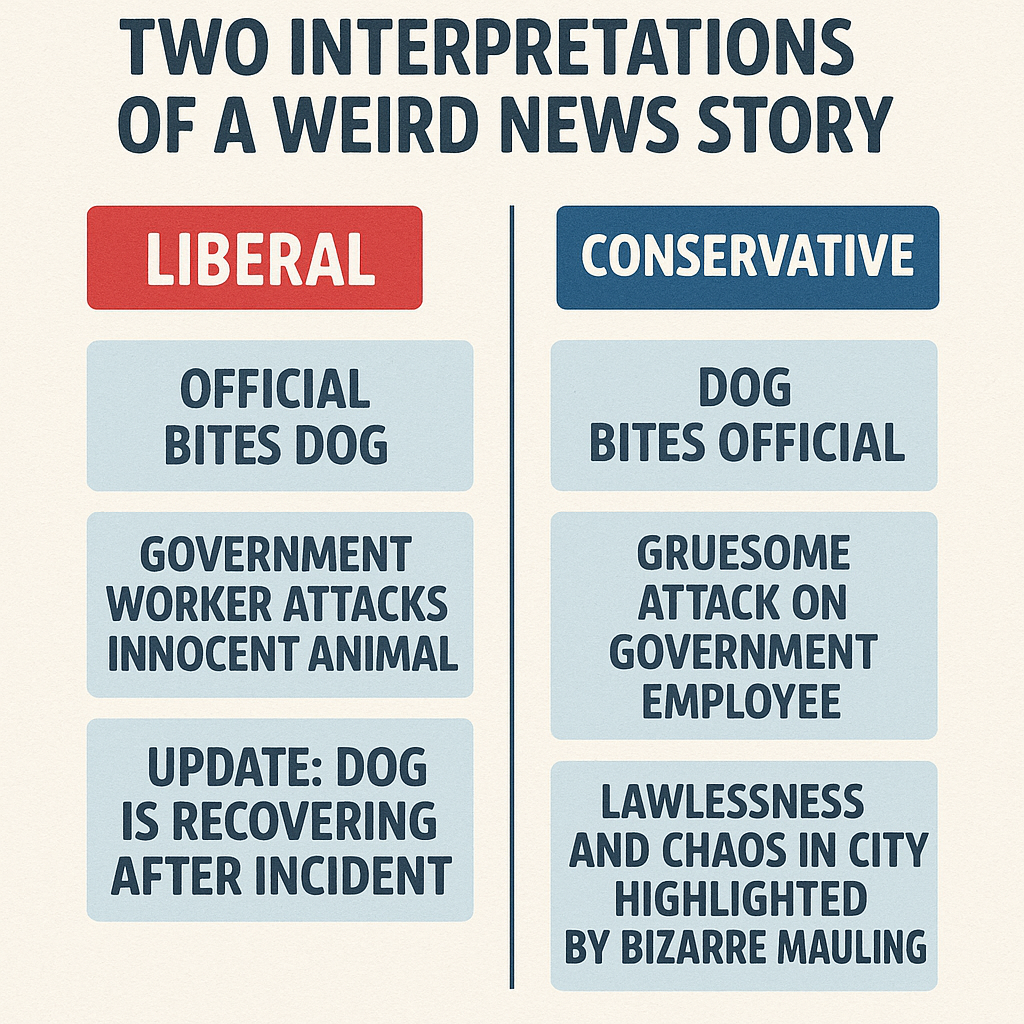
Both methods suggest that polarization in weird news follows similar dynamics as in political news. People are drawn to stories that reflect or reinforce their group identity, often through cues such as source credibility, headline framing, or accompanying commentary. Online algorithms amplify this tendency, using previous engagement data to recommend similar content. Over time, this results in clustering, where liberals and conservatives are exposed to different versions of the same story—or entirely different stories altogether. This ideological clustering is particularly visible on platforms with strong recommendation engines or where users curate their own feeds, such as Twitter and Facebook [4].
Another key mechanism is social sharing. Users are more likely to share weird news that aligns with their group’s beliefs, contributing to the viral spread of ideologically tinged narratives. In some cases, group norms discourage engagement with stories that contradict dominant perspectives, reinforcing echo chamber effects. This dynamic is not limited to overtly political stories; even innocuous or apolitical weird news can take on partisan coloring through selective emphasis or interpretation. Understanding these mechanisms is vital for those seeking to mitigate polarization, as it highlights points of intervention for platforms and content creators alike.
Section Summary
Polarization in weird news is measured through surveys and behavioral tracking, revealing mechanisms like identity reinforcement, algorithmic curation, and social sharing that drive ideological clustering.
Viral Weird News: Engagement, Misinformation, and Effects
The viral spread of weird news stories has profound implications for public engagement and the dissemination of misinformation. In a polarized environment, the speed and reach of a story are often influenced by its alignment with audience expectations and ideological predispositions. Viral weird news is not inherently misleading, but the same dynamics that promote rapid sharing—emotional arousal, novelty, and group relevance—can also facilitate the circulation of distorted or fabricated narratives [5].
For example, a story about an unusual scientific discovery may be embraced by one ideological group as evidence supporting their beliefs, while skeptics on the other side may dismiss it as a hoax or exaggeration. Sometimes, weird news is intentionally manipulated to provoke outrage or amusement among a target audience, blurring the line between satire and misinformation. Social media platforms, with their emphasis on engagement metrics, can inadvertently prioritize such content, further amplifying polarization.
These effects extend beyond individual stories to shape broader public perceptions. Over time, repeated exposure to ideologically aligned weird news can reinforce stereotypes, foster mistrust of out-group sources, and influence attitudes toward science, culture, or public policy. This makes the management of weird news content an important consideration for journalists, educators, and technology designers. While the relationship between viral weird news and misinformation is complex, ongoing research suggests that targeted interventions—such as fact-checking labels, transparency in algorithms, and digital literacy initiatives—could help mitigate negative effects, although their efficacy may vary depending on context [6].
Section Summary
Viral weird news, shaped by ideological biases, can fuel misinformation and influence public attitudes, highlighting the need for thoughtful interventions.
Algorithmic Influence and Platform Design
Online platforms play a pivotal role in shaping the polarized consumption of weird news through the design of their algorithms and user interfaces. Recommendation systems are programmed to maximize engagement, often by suggesting content similar to what users have previously interacted with. This can inadvertently create feedback loops where users are increasingly exposed to ideologically congruent weird news, while less familiar or challenging perspectives are filtered out [7]. The result is a personalized media landscape that reinforces existing biases and limits opportunities for cross-cutting exposure.
Platform design choices such as trending lists, news feeds, and comment sections can further amplify polarization. For example, when trending topics are determined by user engagement without context or editorial oversight, bizarre or fringe stories with partisan appeal can quickly dominate public attention. Algorithms that prioritize emotionally charged or highly shared content may inadvertently promote the most polarizing interpretations of a weird news event, even if more balanced or nuanced reporting exists elsewhere.
Efforts to reduce polarization must consider these structural factors. Some platforms have experimented with interventions such as exposure to counter-attitudinal content, third-party fact-checking, and more transparent algorithmic processes. While these measures show promise, they also carry risks—such as backlash from users who perceive interventions as censorship. Effective solutions may require a combination of algorithmic adjustments, user empowerment tools, and collaborative oversight between platforms, journalists, and civil society organizations. Addressing the algorithmic roots of weird news polarization is a complex but essential step toward healthier public discourse.
Section Summary
Platform algorithms and design significantly shape polarized weird news consumption, necessitating thoughtful technical and editorial interventions.
The Role of Journalists and Civic Actors
Journalists and civic actors occupy a critical position in addressing polarization in weird news consumption. As curators and interpreters of unusual stories, journalists have the power to shape how these events are understood and discussed across ideological divides. Responsible reporting practices, such as contextualizing bizarre incidents and highlighting cross-group relevance, can help reduce the likelihood of misinterpretation or partisan misuse [8]. Ethical guidelines, including the avoidance of sensationalism and attention to inclusivity, are particularly important in this space, where the line between entertainment and information can blur.
Civic actors—including educators, fact-checkers, and advocacy organizations—also play a role in mediating the impact of weird news. Initiatives that promote media literacy, critical thinking, and awareness of algorithmic influence empower individuals to navigate a complex media environment. For instance, digital literacy workshops may equip audiences to recognize when a weird news story is being framed in a partisan manner or when viral content may be misleading. Collaborative fact-checking efforts can quickly debunk emerging hoaxes, reducing the risk of polarization-driven misinformation.
However, the efficacy of these interventions depends on public trust and institutional credibility. Journalists and civic actors must continuously engage with diverse communities, foster dialogue, and adapt strategies to evolving media habits. Building bridges between polarized audiences requires sustained commitment and innovation, especially as the nature of weird news—and its role in public discourse—continues to change. Ultimately, cross-sector collaboration may offer the most promising path forward, ensuring that the consumption of weird news contributes to curiosity and understanding rather than division.
Section Summary
Journalists and civic actors can help counter weird news polarization through ethical reporting and education, fostering media literacy and inclusivity.
Toward Healthier Discourse: Opportunities and Challenges
As the landscape of weird news continues to evolve, opportunities and challenges abound for reducing polarization and fostering healthier public discourse. On the one hand, weird news stories have the potential to spark curiosity, laughter, and shared experience across divides. Harnessing this potential requires careful attention to how stories are framed and shared. Platforms and publishers may experiment with editorial approaches that emphasize universal themes, bridge-building, or collective problem-solving, rather than focusing solely on ideological differences [9].
At the same time, significant obstacles remain. Efforts to depolarize weird news consumption must contend with entrenched biases, technological constraints, and the commercial incentives that favor engagement over nuance. The risk of “both-sidesism” or false equivalence in reporting should also be considered, as not all perspectives on a weird news story are equally valid or constructive. Strategies to promote healthier discourse must be evidence-based and sensitive to context, acknowledging that no single intervention will eliminate polarization entirely.
Looking ahead, collaboration among technology companies, journalists, educators, and policymakers is essential. Pilot programs that test new recommendation algorithms, cross-partisan dialogue initiatives, and targeted media literacy campaigns could provide valuable insights. Importantly, solutions should be co-developed with input from affected communities, ensuring that interventions are both effective and inclusive. As public awareness of polarization in weird news grows, individuals can also play a role by reflecting on their own consumption habits and seeking diverse sources. Together, these efforts may gradually shift the landscape toward a more informed, connected, and resilient public sphere.
Section Summary
Efforts to reduce polarization in weird news face challenges but offer opportunities for healthier, more inclusive public discourse through innovation and collaboration.
