The New Paradigm: Defining Living Intelligence
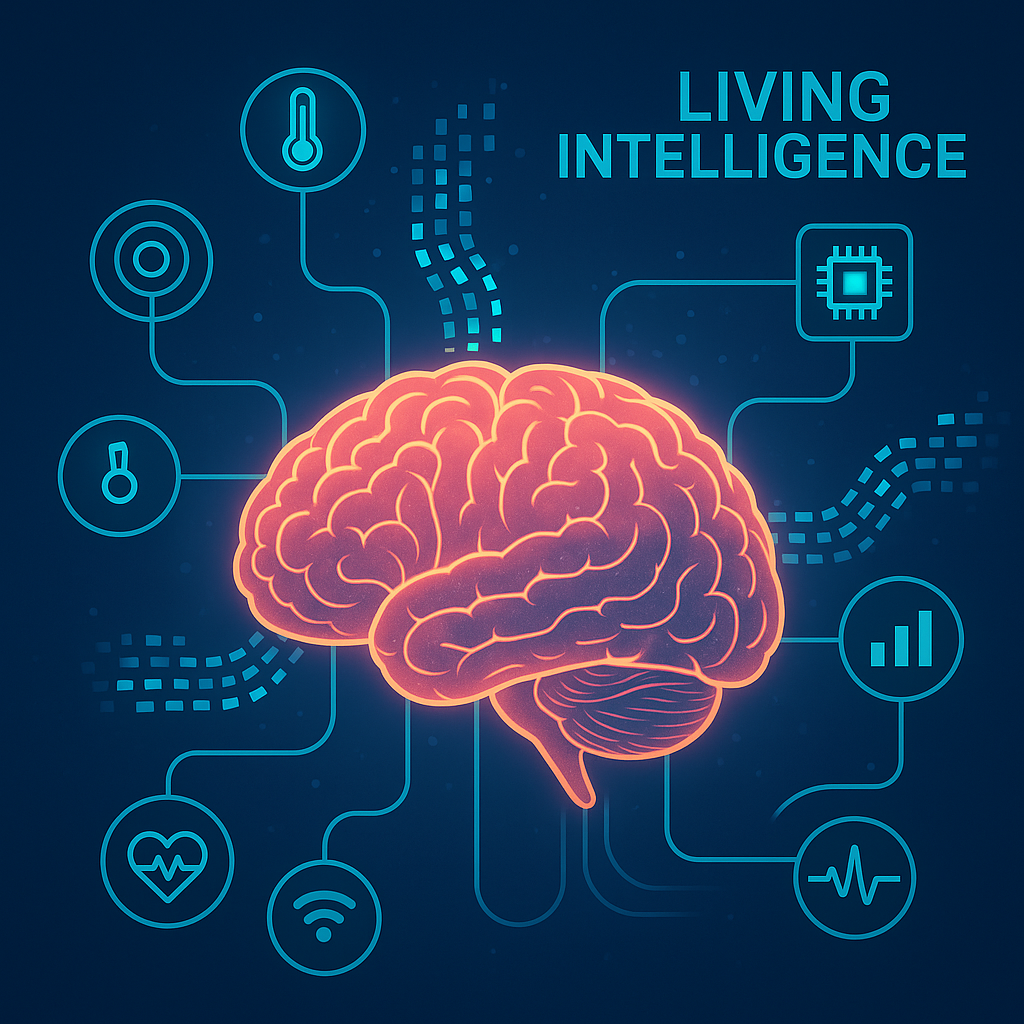
Technological innovation is reaching an unprecedented intersection where the boundaries between digital and biological systems are blurring. This new paradigm, often referred to as 'Living Intelligence,' is driven by the convergence of artificial intelligence (AI), biotechnology, and advanced sensors. These domains, once largely independent, are now forming a synergistic triad capable of real-time sensing, learning, and adaptive response. Unlike traditional computing, which is rule-based and deterministic, Living Intelligence embodies the qualities of biological systems—such as adaptability, self-healing, and context awareness—enabled through data-rich environments and programmable biological processes.
The integration of sensors with biological systems allows for the continuous monitoring of physiological, environmental, and behavioral variables. AI algorithms process the data streams generated by these sensors, extracting patterns, identifying anomalies, and supporting intelligent decision-making. Meanwhile, biotechnology leverages genetic engineering and synthetic biology to develop new biological materials and processes that interact seamlessly with digital technologies. Together, these elements not only extend human capabilities but also lay the groundwork for hybrid systems that adapt, evolve, and improve over time.
This convergence is not merely an incremental advance but represents a foundational shift. For example, the development of biohybrid devices—such as neural interfaces and smart prosthetics—demonstrates how digital and biological intelligence can coalesce into unified, living systems. These innovations are setting the stage for a future where technology is not simply used by living beings, but becomes living, sensing, and evolving itself, opening up profound possibilities and responsibilities for society.
Summary
The merging of AI, biotech, and sensors is establishing a new paradigm of Living Intelligence with adaptive, self-improving capabilities.
Core Technologies: How AI, Biotech, and Sensors Reinforce Each Other
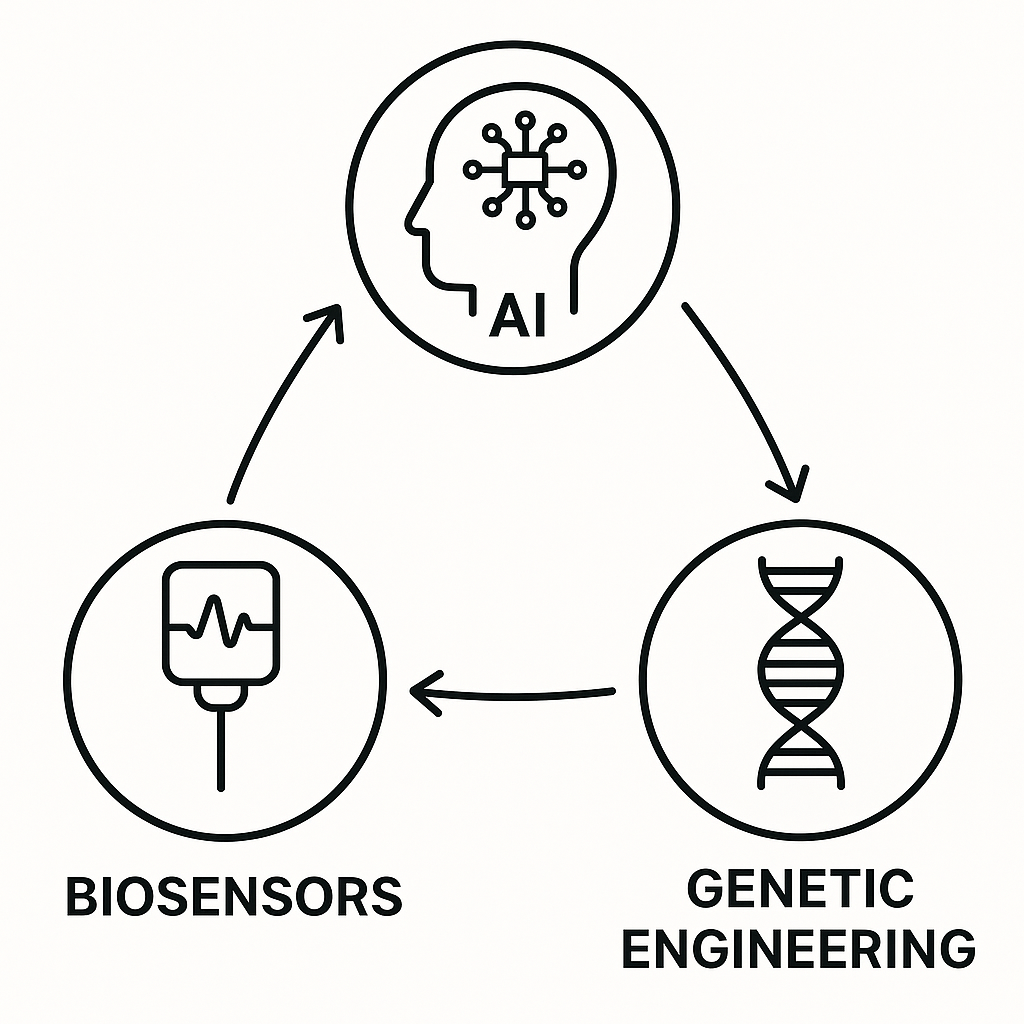
The core technologies underpinning the Living Intelligence paradigm each bring unique strengths that amplify the impact of the others. Artificial intelligence excels at pattern recognition, inference, and predictive modeling, especially when fueled by large, diverse datasets. Biotechnology offers programmable tools, such as CRISPR and synthetic biology platforms, that can reprogram living cells to perform computational tasks or sense environmental cues. Advanced sensors, now capable of molecular-level detection and wireless communication, provide a real-time data pipeline essential for both AI analysis and biological actuation.
For instance, biosensors embedded within the body can continuously monitor biomarkers like glucose or cortisol. AI algorithms interpret these readings, identifying subtle shifts that may precede disease. When combined with biotech-enabled drug delivery systems, the technology can trigger the precise release of therapeutics, effectively creating closed-loop medical interventions. Similarly, environmental sensors can monitor air quality or detect pathogens, with AI synthesizing the information and biotechnological systems responding through targeted bioremediation efforts.
This mutual reinforcement is creating feedback loops where digital intelligence and biological function are tightly coupled. As sensors grow smaller and more sophisticated, and as biotech enables finer control over living systems, the role of AI as the 'brain' coordinating these inputs and outputs becomes ever more vital. The interplay of these technologies does not only enhance their individual potential—it redefines what each can achieve, opening new frontiers in health, sustainability, and human augmentation.
Summary
AI, biotech, and sensors amplify one another through tightly coupled data-driven feedback loops, accelerating advances in medicine, environment, and augmentation.

Disruptive Applications and Societal Impact
The fusion of biotechnology, AI, and advanced sensors is already reshaping industries and daily life. In healthcare, continuous glucose monitoring systems equipped with AI provide diabetics with real-time insights and adaptive insulin management. Environmental monitoring networks now leverage distributed biosensors and machine learning to track pollutants or pathogens across entire ecosystems. Meanwhile, human-technology symbiosis is advancing through brain-computer interfaces, enabling new forms of communication for individuals with disabilities and even enhancing cognitive abilities for the broader population.
However, the transformative potential of these applications is matched by complex societal and ethical questions. Issues of data privacy, consent, and algorithmic bias become more pronounced as more intimate and pervasive data is collected. Additionally, the use of programmable biology in open environments raises concerns about unintended ecological consequences and the equitable distribution of benefits. These challenges necessitate ongoing dialogue and the development of inclusive regulatory frameworks that ensure safety, transparency, and accessibility.
Despite these hurdles, the positive societal impact of tech convergence could be substantial. Improved disease prevention, more sustainable agriculture, and resilient environmental systems are within reach. To fully realize these benefits, multidisciplinary collaboration across scientific, ethical, and community stakeholders will be essential. It is important to acknowledge that while the trajectory appears promising, responsible stewardship and vigilance are crucial as the technology matures and diffuses throughout society.
Summary
Convergent technologies are disrupting health, environment, and society, while also introducing ethical challenges requiring thoughtful regulation and oversight.
Enabling Real-Time Sensing, Learning, and Adaptation
One of the defining features of the current technological convergence is the capacity for real-time sensing, learning, and adaptation. Modern biosensors and environmental monitors are now embedded in devices ranging from smartwatches to urban infrastructure. These sensors continuously generate a deluge of data—physiological, chemical, physical—which is rapidly processed by AI systems designed for context awareness and predictive analysis.
This real-time data flow allows systems to respond dynamically to changing conditions. For example, wearable health monitors can detect early warning signs of cardiac events and alert both patients and healthcare providers instantaneously. In industrial or agricultural contexts, sensor networks may identify contamination or environmental stress, triggering targeted interventions powered by biotech agents or automated machinery. Through continuous feedback and adjustment, these systems optimize outcomes, reduce waste, and improve quality of life.
As these capabilities advance, it is important to recognize that the transition to real-time, adaptive technologies also introduces new dependencies and risks. System failures, cybersecurity vulnerabilities, or data quality issues could undermine trust and effectiveness. Consequently, robust design, resilient infrastructure, and transparent operational protocols are essential to ensure these systems deliver intended benefits without unintended consequences.
Summary
Real-time sensing and adaptive learning, enabled by AI and sensors, underpin the responsive, context-aware systems shaping the new era of tech convergence.
Biological and Digital Intelligence: Toward Hybrid Systems
The line between biological and digital intelligence is becoming increasingly blurred through hybrid systems that integrate computational logic with living processes. Brain-computer interfaces, bioelectronic medicines, and synthetic organisms exemplify this trend, combining the adaptability of biological systems with the speed and scalability of digital computation. For instance, researchers are developing artificial neurons that communicate directly with biological tissues, enabling bidirectional information flow between machines and the nervous system.
In synthetic biology, engineered microbes capable of computation and environmental sensing are being designed to perform tasks such as pollutant degradation or disease detection. These living machines can autonomously navigate complex environments, respond to stimuli, and even evolve over time. AI algorithms are critical in optimizing these organisms’ behavior, both in the lab and in the field, allowing for rapid prototyping and deployment of new functions.
While the prospects are promising, the hybridization of digital and biological systems also presents unique governance and ethical challenges. Ensuring safety, reliability, and societal benefit requires rigorous validation, transparent reporting, and inclusive stakeholder engagement. As these hybrid systems become more prevalent, ongoing reflection on their societal implications will be essential to maximize benefit and minimize harm.
Summary
Hybrid biological-digital systems are emerging, merging the strengths of both realms and raising important questions about safety, governance, and ethical oversight.
Challenges, Risks, and the Path Forward
As technology convergence accelerates, so too do the challenges and risks associated with its widespread adoption. Data privacy is a paramount concern, especially when health and biometric information is collected at unprecedented scales. Bias in AI algorithms—stemming from incomplete, unrepresentative, or historically biased datasets—can lead to inequitable outcomes in both health and environmental contexts. There is also the risk that programmable biological technologies could have unintended side effects or be misapplied, resulting in harm to individuals or ecosystems.
Cybersecurity emerges as a crucial issue, as interconnected sensor networks and bio-digital systems become targets for malicious attacks. Protecting these networks from breaches, sabotage, or data manipulation will require advanced technical safeguards and vigilant monitoring. Moreover, the complexity of convergent systems poses challenges for oversight and accountability, demanding new forms of regulation that can keep pace with innovation without stifling beneficial progress.
To address these issues, interdisciplinary collaboration among technologists, ethicists, policy-makers, and community representatives is essential. Public engagement and transparent communication can help build trust and guide the responsible development of these transformative technologies. While the future is uncertain and some risks may only become apparent over time, proactive governance and inclusive dialogue will be key to realizing the promise of Living Intelligence in an ethical, equitable, and sustainable manner.
Summary
Addressing the risks and ethical challenges of tech convergence requires proactive governance, inclusive dialogue, and robust safeguards for privacy, security, and equity.
Shaping the Future: Opportunities for Inclusive Innovation
Looking ahead, the convergence of biotech, AI, and sensors presents unparalleled opportunities for inclusive innovation and societal advancement. These technologies could democratize access to health care, empower communities with environmental intelligence, and foster new forms of creativity and learning. For example, low-cost biosensors and open-source AI tools are enabling grassroots initiatives to monitor local water quality, address environmental injustice, and improve public health outcomes in underserved regions.
At the same time, the future of tech convergence will be shaped by the values, policies, and collective choices of societies. Ensuring equitable access, fostering diversity in technology development, and supporting education and digital literacy will be crucial for widespread benefit. Policy-makers, technologists, and communities must work together to design frameworks that maximize positive impact while minimizing disparities and unintended harms.
As we stand at the threshold of a new era of Living Intelligence, every individual has a role to play. Whether as innovators, advocates, or informed citizens, engagement and dialogue will drive the inclusive, responsible, and ethical integration of these convergent technologies. The choices we make today will influence not only the trajectory of technological advancement but also the fabric of society for generations to come. Stay informed, participate in community discussions, and advocate for policies that reflect shared values and aspirations.
Summary
The future of tech convergence hinges on inclusive innovation, equitable access, and collective action to ensure benefits for all communities.
